NTUST monitors the amount of food waste generated by food served on campus through a mandatory kitchen waste measurement and reporting system. Under Taiwan's Waste Disposal Act (廢棄物清理法) and the Regulations Governing the Collection, Removal, and Treatment of General Waste (一般廢棄物回收清除處理辦法), all on-campus food service providers, whether self-operated or outsourced, are legally required to collect, sort, weigh, and record their kitchen waste before it is picked up by authorized waste disposal services. Each month, the relevant university offices receive kitchen waste weighing records from the contracted kitchen waste treatment vendors, compile them into the NTUST Recycling Statistics, and report the figures to the Department of Environmental Protection, Taipei City Government.
According to these records, NTUST has logged weighed food waste and waste cooking oil for 69 consecutive months since January 2021. From 2021 to 2025, the university tracked a total of 197,830 kg of food waste and 22,530 kg of waste cooking oil. Food waste in 2025 totalled 37,078 kg, 13.9% lower than in 2024 and 25.9% lower than the 2022 peak.
- Legal basis: Under the Waste Disposal Act and related regulations, food service operators must separate kitchen waste from general refuse and hand it over to licensed collectors.
- Scope: All campus food outlets are covered, self-operated or outsourced: the Student Activity Center 1st Cafeteria (formerly the 1st Dining Hall), the 2nd Cafeteria (formerly the Faculty Dining Hall, closed July 2024), the 2nd Academic Building cafeteria (formerly the 3rd Dining Hall) and the Yi-Yang cafeteria (formerly the 2nd Dining Hall).
- Weighing at every pickup: Kitchen waste is weighed and recorded each time it is collected. Waste cooking oil is collected and weighed separately as well.
- Licensed reuse: Food waste goes to licensed livestock farms (Rong-Quan Livestock Farm and Pang-Du-Du Farm) for reuse. Waste cooking oil goes to licensed oil recyclers (Jing-Zi Enterprise Co., Ltd. and Eucalyptus Environmental Co., Ltd.).
- Monthly compilation and reporting: The General Affairs Section of the Office of General Affairs collects each outlet's weighing slips every month. It records them in the NTUST Recycling Statistics (food waste, waste cooking oil and 20+ other recyclable categories) and submits the figures online to the Taipei City environmental authority.
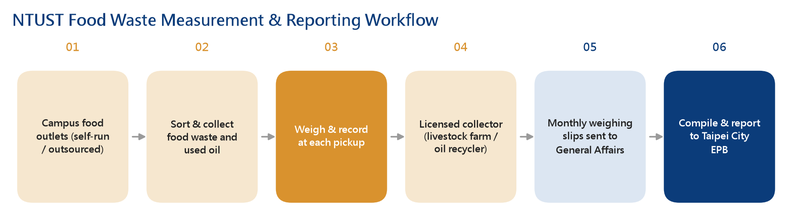
Figure 1. NTUST food waste measurement and reporting workflow
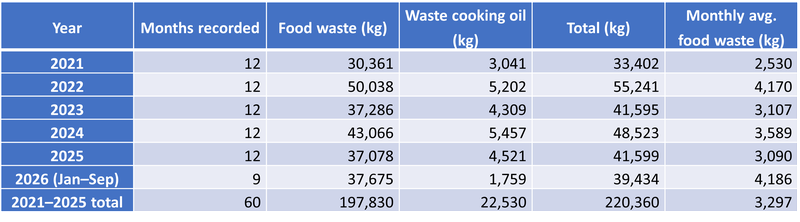
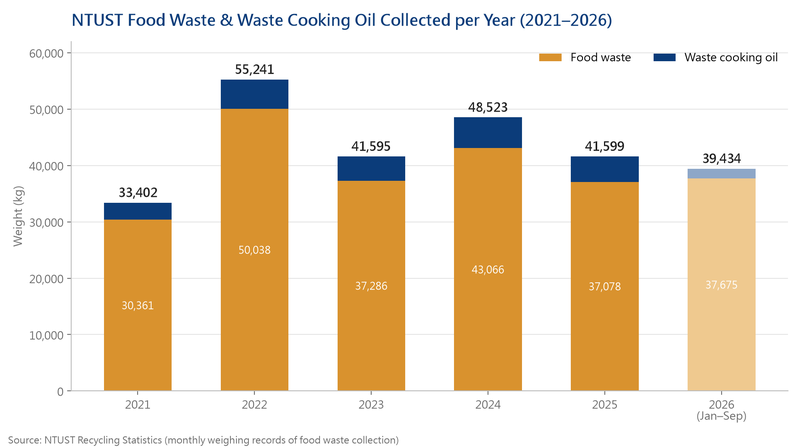
Figure 2. Annual food waste and waste cooking oil collected at NTUST (2021–2026)
Year-on-year notes:
- 2021 (30,361 kg): Lowest of the five years. Taiwan's COVID-19 Level 3 alert closed the 1st Dining Hall from mid-May and the Faculty Dining Hall in October. In August–September, food waste was temporarily handled as general refuse under African swine fever prevention measures.
- 2022 (50,039 kg): All outlets resumed normal operation. This was the five-year peak.
- 2023 (37,286 kg): The 1st Dining Hall closed for July–September, and monthly food waste in that period fell to 30–380 kg.
- 2024 (43,066 kg): Food waste peaked at 7,060 kg in March. The Faculty Dining Hall closed in July.
- 2025 (37,078 kg): The monthly average was 3,090 kg, ranging from 1,890 kg (January) to 3,710 kg (April). This was 13.9% lower than in 2024. Waste cooking oil totalled 4,521 kg.
The monthly records track the academic calendar. Food waste is higher during semesters (March–May and September–December) and drops in the winter (January–February) and summer (July–August) breaks. While the 2nd Academic Building cafeteria was renovated in July–August 2026, food waste fell to 1,800–2,200 kg per month, and it rose again when the semester started in September. This continuous monthly data shows the university when and where food waste is generated, and it informs food-surplus reduction and catering management.
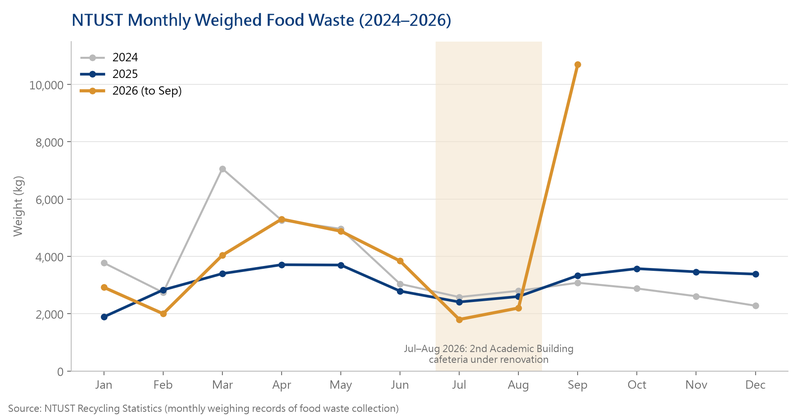
Figure 3. Monthly weighed food waste at NTUST (2024–2026)
NTUST uses the same weigh-and-record approach for contracted solid waste (waste codes D-2101 and C-0599). This waste is collected weekly and weighed at every pickup, and since 2025 each pickup has been logged with its waste manifest number. In 2025 there were 48 weighed pickups totalling 14.88 tonnes. From January to October 2026 there were 42 pickups totalling 12.75 tonnes. Because food waste and other waste streams are all based on actual weighed amounts, together they form a complete campus waste-tracking system.
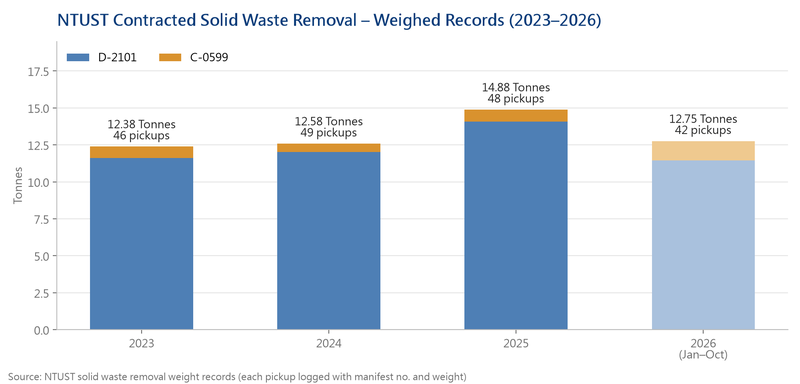
Figure 4. Weighed records of contracted solid waste removal at NTUST (2023–2026)
NTUST has a legally mandated system for measuring campus food waste. Kitchen waste from every on-campus food outlet is sorted, weighed and recorded before licensed collectors take it for reuse, and the responsible offices receive the weighing records every month and report them to the authorities. The accumulated monthly data lets the university follow food waste generation over the long term. Food waste fell by 13.9% in 2025 compared with 2024.