National Taiwan University of Science and Technology (NTUST, Taiwan Tech) takes part in many research projects commissioned or funded by government agencies, including the National Science and Technology Council (NSTC, formerly the Ministry of Science and Technology), the Ministry of Education, the Ministry of Environment and the Ministry of National Defense, and it carries out research in partnership with government departments. The four cases below are government-funded projects led by NTUST faculty, selected from the research highlights published in the analysis reports of the Government Research Bulletin (GRB).
PI: Prof. Wei-Song Hung, Graduate Institute of Applied Science and Technology | Funding: Ministry of Science and Technology (now NSTC)
Climate change is causing water shortages, power shortages and environmental damage worldwide. With multi-year funding from the Ministry of Science and Technology (now NSTC), Prof. Wei-Song Hung's team at NTUST carried out projects on conductive graphene membranes for forward-osmosis separation (2016–2018), functionalized graphene-framework filter bags for precious-metal recovery and dye-wastewater reclamation (2019), and a research-based entrepreneurship project (2021). The result is the "Black Magic Carpet", a graphene membrane that produces water and electricity at the same time. Made by pressing and drying graphene slurry into a thin, metallic-black film, it can be built into solar evaporators and wave-energy generators: sunlight turns seawater into drinking water that meets WHO standards, while ocean waves generate electricity. The product is easy to manufacture and scale up. The team solved key problems in formulating, dispersing and coating graphene. Its converse piezoelectric coefficient is several times that of commercial piezoelectric films, and it is produced with a roll-to-roll coating process. The technology is promoted with support from the University of Oxford's innovation platform and won a 2022 R&D 100 Award. Next, the team plans to apply the work to "urban mining": recovering valuable metals and reclaiming dye wastewater.
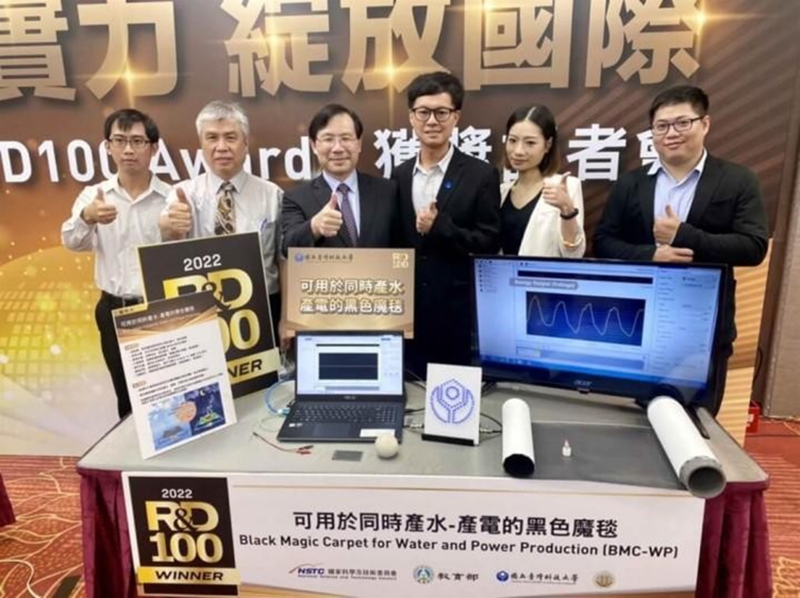
Figure 1. The team won a 2022 R&D 100 Award for the "Black Magic Carpet" for simultaneous water and power generation (Source: research team (GRB report))
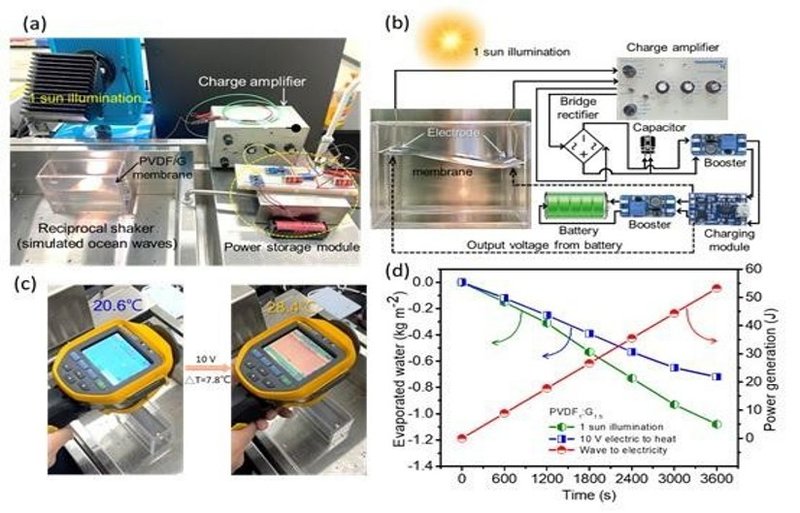
Figure 2. Graphene membrane module for water production (Source: research team (GRB report))
- GRB analysis report: https://www.grb.gov.tw/search/report/14740543
- GRB project record: 導電石墨烯薄膜應用於正向滲透分離程序(105年) https://www.grb.gov.tw/search/planDetail?id=11890227
- GRB project record: 導電石墨烯薄膜應用於正向滲透分離程序(106年) https://www.grb.gov.tw/search/planDetail?id=12027685
- GRB project record: 導電石墨烯薄膜應用於正向滲透分離程序(107年) https://www.grb.gov.tw/search/planDetail?id=12379988
- GRB project record: 官能化石墨烯框架濾袋於有價金屬回收與染料廢水再生之應用(108年) https://www.grb.gov.tw/search/planDetail?id=13239144
- GRB project record: 科研創業計畫:自極化電響應石墨烯複合材料於塗佈感測領域之應用(110年) https://www.grb.gov.tw/search/planDetail?id=13993751
- NTUST News: Taiwan Tech Professor creates "Black Magic Carpet" enabling modular, low-carbon production (19 Jan 2026) https://www.ntust.edu.tw/p/16-1000-144517.php?Lang=en
- Taiwan News: graphene membrane generates power and purifies water https://www.taiwannews.com.tw/en/news/6285248
- Taipei Times (19 Jan 2026) https://www.taipeitimes.com/News/taiwan/archives/2026/01/19/2003850868
- 自由時報:可同時產生水電的石墨烯 台科大教授洪維松獲全球百大科技研發獎 https://news.ltn.com.tw/news/life/breakingnews/4111953
- 中央社:石墨烯「魔毯」產水電還把海水變能喝 台科大團隊獲研發界奧斯卡獎 https://www.cna.com.tw/news/ait/202211040040.aspx
- 1111人力銀行新聞:臺科大打造「黑色魔毯」一膜雙效 低碳淨水與發電模組化 https://www.1111.com.tw/news/jobns/164184
PI: Prof. Ching-Wei Wang, Graduate Institute of Biomedical Engineering | Funding: MOST (now NSTC) Value Creation Program
Prof. Ching-Wei Wang of NTUST's Graduate Institute of Biomedical Engineering has long worked in digital pathology. Since 2017, Prof. Wang's team has combined big data, image analysis and cloud computing, using AI to analyze pathology images and diagnostic records to support diagnosis. Supported by the MOST Value Creation Program project "Commercialization of Giga-pixel/Tera-pixel Image Cloud Technology" (2017–2018), the team founded the spin-off company AIExplore in December 2017. They built an AI high-performance computing (AI HPC) platform for real-time gigapixel image analysis, terapixel image serving, and AI-based 3D reconstruction. In 2019, the team trained a lung-cancer tissue model on only 33 images and placed 8th of 435 teams worldwide (top 1.8%) in an international medical-imaging AI challenge. The platform automatically quantifies breast-cancer slides across stains. It has been tested in proof-of-concept projects with Tri-Service General Hospital and National Taiwan University Hospital on cervical smears and breast-cancer lymph-node metastasis. The team has also worked with NVIDIA on edge-computing solutions and expanded to Japan and Southeast Asia, showing how government-funded research becomes industrial application.
- GRB analysis report: https://www.grb.gov.tw/search/report/13243821
- GRB project record: 價創計畫:巨量影像雲端技術之事業化與商品化計畫(106年) https://www.grb.gov.tw/search/planDetail?id=12484351
- GRB project record: 價創計畫:巨量影像雲端技術之事業化與商品化計畫(107年) https://www.grb.gov.tw/search/planDetail?id=12750773
- NTUST News: Pioneering AI in Medicine: An Interview with Professor Ching-wei Wang https://www.ntust.edu.tw/p/16-1000-129976.php?Lang=en
- AIExplore official website http://aiexplore.ntust.edu.tw/index.html
- 產學研鏈結中心:巨量影像雲端技術之事業化與商品化計畫 https://www.tsi.center/portfolio-item/entrepreneurship-and-commercialization-of-giga-pixel-tera-pixel-image-cloud-technology-2/
- DIGITIMES:自己的AI自己做 影豹AI協助企業橫跨醫療與工業 https://www.digitimes.com.tw/iot/article.asp?cat=158&id=0000552020_1501MGFN1GTYO01U755U5
- 中央社:科技部價創計畫 助19所大專院校投入科研創業 https://www.cna.com.tw/news/afe/201809280122.aspx
PI: Prof. Shi-Cho Cha, Department of Information Management | Funding: MOST (now NSTC)
Connected-vehicle technology links cars to nearby vehicles, traffic signals, satellites and cloud services, which improves traffic efficiency. It also lets hackers break into in-vehicle computers and remotely control steering and braking. Prof. Shi-Cho Cha's team in NTUST's Department of Information Management led the 2022 MOST integrated project "Zero-Trust Architecture for Connected Vehicles". Its sub-projects covered adaptive access control and privacy protection for different services, lightweight authentication protocols, and secure, traceable data sharing and transmission. Modeled on the safety instrumented systems used in industrial control, the team built a risk-monitoring center inside the vehicle network to track the risk level of each component. It applies a zero-trust approach: every message from a connected device is treated as possibly compromised, so the device's identity and operating status are first verified through digital certificates, encrypted transmission and digital signatures before any command is carried out. The design also takes personal safety into account, so that when cybersecurity and physical safety conflict, decisions follow the driving situation. The results give carmakers a security reference as they move to zonal in-vehicle network architectures, and can be extended to industrial control systems, smart manufacturing and critical infrastructure.
- GRB analysis report: https://www.grb.gov.tw/search/report/16391229
- GRB project record: 車聯網之零信任架構-車聯網異質服務之適應性存取控制與隱私保護(111年) https://www.grb.gov.tw/search/planDetail?id=14505880
- GRB project record: 車聯網之零信任架構-基於零信任架構之輕量級車聯網鑑別協定(111年) https://www.grb.gov.tw/search/planDetail?id=14502733
- GRB project record: 車聯網之零信任架構-應用於車聯網之資料分享與可追溯安全傳輸機制(111年) https://www.grb.gov.tw/search/planDetail?id=14506017
- NTUST News (related): Taiwan Tech Explores Trends and Challenges in Zero Trust Cybersecurity Architecture https://www.secretariat.ntust.edu.tw/p/16-1063-126103.php?Lang=en
- 科技大觀園:當「車聯網」之後,該如何避免方向盤被駭客操控?專訪國立臺灣科技大學資訊管理系查士朝教授 https://scitechvista.nat.gov.tw/Article/C000003/detail?ID=e9a2e8c7-bbbf-4929-9b86-44957ca0f189
- 數位時代:Gogoro三大資安風險揭密,小心所有物聯網產品! https://www.bnext.com.tw/article/40327/BN-2016-07-25-200710-44
PI: Distinguished Prof. Jing-Ming Guo, Department of Electrical Engineering | Funding: MOST (now NSTC)
Pictures in newspapers and magazines are printed with digital halftoning, which imitates shades of light and dark by varying how dots are arranged and how densely they are packed. Current methods, however, tend to produce artifacts such as jagged edges and visible texture in smooth regions (like sky) and around text when images are compressed or reconstructed. In the MOST (now NSTC)-funded project "Comprehensive Advancement and Extended Research of Next-Generation Digital Halftoning" (2020–2022), Distinguished Prof. Jing-Ming Guo's team at NTUST developed a stacking-constraint technique that handles boundary artifacts and an adaptive-variance halftoning scheme that makes dot printing more stable. They also used convolutional neural networks (CNN) and generative adversarial networks (GAN) to improve image restoration. The work markedly reduces artifacts and preserves fine detail, a breakthrough for print image quality. Prof. Guo was elevated to IEEE Fellow and AAIA Fellow in 2025 and continues to lead the team toward industrial use.
- GRB analysis report: https://www.grb.gov.tw/search/report/18881528
- GRB project record: 新世代數位半色調技術之全面精進暨延伸研究探討(109年) https://www.grb.gov.tw/search/planDetail?id=13536965
- GRB project record: 新世代數位半色調技術之全面精進暨延伸研究探討(110年) https://www.grb.gov.tw/search/planDetail?id=13936275
- GRB project record: 新世代數位半色調技術之全面精進暨延伸研究探討(111年) https://www.grb.gov.tw/search/planDetail?id=14608145
- NTUST News: Jing-Ming Guo elevated to IEEE Fellow https://www.ntust.edu.tw/p/16-1000-135026.php?Lang=en
- Jing-Ming Guo, IEEE Fellow (lab page) https://sites.google.com/view/ntust-mspl/jing-ming-guo
- 經濟日報:電力電子與AI技術雙突破 臺科大教授邱煌仁、郭景明獲IEEE Fellow殊榮 https://money.udn.com/money/story/5723/8530918
- 臺科大多媒體訊號處理實驗室:數位半色調技術(Digital Halftoning) https://sites.google.com/site/mspeentust/shi-yan-shi-jian-jie/shu-wei-ban-se-diao-ji-shu