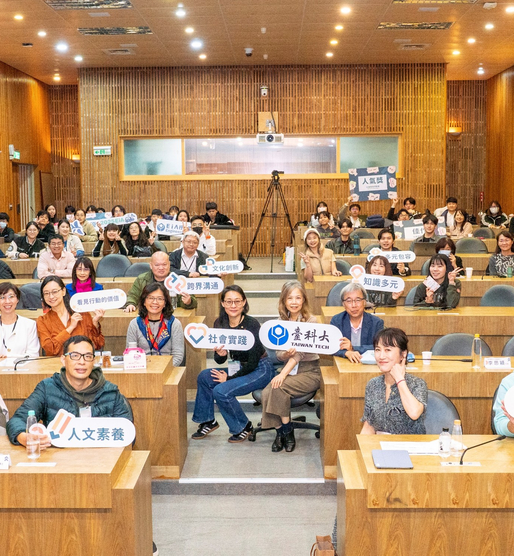
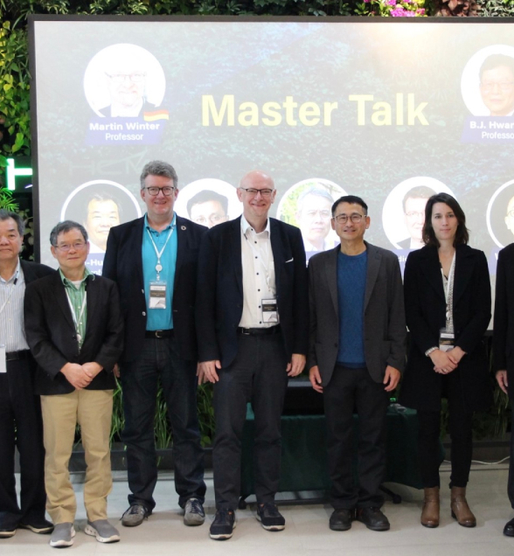
NTUST's General Education Center has held the Chengnan Forum (城南講堂) every year since 2022. It gives government officials, industry representatives, researchers and other stakeholders a platform to present different views on major public policy issues. The series is academic and non-partisan: speakers set out their own views, answer questions and discuss with participants, so the university can host open discussion of unsettled policy questions without taking a single institutional position. Past themes: 2022 "Professionalizing General Education: Teaching and Practice"; 2023 "Professionalization of General Education"; 2024 "Sustainable Place-Based Studies Co-Created by Faculty and Students"; 2025 "Repositioning General Education: Knowledge, Action and Social Impact".Theme 1: Bridging Professional and General EducationRelated forum sessions2022 Chengnan Forum, "Professionalizing General Education: Teaching and Practice" (18 Nov 2022, IB-101)2023 Chengnan Forum, "Professionalization of General Education" (20 Oct 2023, IB-202)SummaryThis theme asks how universities can bring humanities literacy and cross-disciplinary thinking into professional and technical courses, while giving general education courses real disciplinary depth. In 2022, several national general-education teaching award winners and well-known professors shared methods for adding general education to professional courses, and the forum encouraged faculty across departments to teach general education. In 2023, Distinguished Chair Professor Liu Bo-hong (Chienkuo Technology University) set out two meanings of "professionalizing general education"; Director Ma Ai-hsuan (NCCU), Dean He Jui-lin (National Pingtung University) and Professor Li Ching-fang (NCUE) discussed curriculum planning; and representatives of the three National Taiwan University System schools (NTUST, NTNU, NTU) discussed the Chengnan district's development and social innovation. Speakers came from different institutions and viewpoints, and the topic, how higher education policy positions and funds professional versus general education, remains an open policy question.Theme 2: Repositioning General Education for the AI and Sustainability EraRelated forum sessions2025 Chengnan Forum, "Repositioning General Education: Knowledge, Action and Social Impact" (5 Dec 2025, RB-102 International Conference Hall; guided by the Ministry of Education; hosted by the Higher Education Sprout Project, the General Education Center and Chengnan College; co-hosted by the MOE USR project "Spark+")SummaryThe 2025 forum argued that general education should not be merely supplementary knowledge; it should spark cross-disciplinary learning, connect with real social problems, and treat action as a catalyst for deeper learning. It discussed how universities turn knowledge into action, how action creates social impact, and how the university-society relationship should be redefined. Director Li Szu-ying and Vice President Wang Chao-cheng opened the event; the panel "Local Practice of Knowledge" was moderated by Dr Wu Chen-pang (NTNU) and the session "Social Impact and Cultural Innovation" by Dr Tsai Hsin-chang (NTNU). The forum took place as the Ministry of Education plans Phase III of the Higher Education Sprout Project and pushes general-education reform and AI governance, giving people inside and outside the university a place to exchange views on that policy direction.Theme 3: University Social Responsibility (USR) and Sustainable Place-Based StudiesRelated forum sessions2024 Chengnan Forum, "Sustainable Place-Based Studies Co-Created by Faculty and Students" (6 Dec 2024, IB-202)2023 Chengnan Forum, social-practice panel (representatives of the three National Taiwan University System schools)SummaryThe 2024 forum centred on "Chengnan Studies" as a cross-campus platform for sharing place-based studies, and on bringing sustainable development into general-education and social-practice courses. Director Wang Chung-ming (Tunghai University) shared his centre's reform experience; Dean Chu Chia-wen (National Dong Hwa University) introduced Hua-Lan College and "Hualien Studies"; Associate Vice Provost Wang Li-jung (NCU) and Section Chief Hsieh Ping-chuan (NKUST) discussed cross-disciplinary training, practice projects and workplace skills; and NTUST lecturers Lin Yi-chen and Hung Hsiu-chin presented the Social Practice Expo, PBL course design and the Chengnan College STREAM immersive summer school. Director Li Szu-ying described place-based studies as a key USR strategy, and President Yen Chia-yu gave the closing remarks. A Social Practice Expo ran alongside, with students from the three NTU System schools presenting work under the themes "Local Chengnan", "Far from Home" and "Sustainable Renewal".Theme 4: Regional Revitalization, Social Impact and Cultural InnovationRelated forum sessions2025 Chengnan Forum: panel "Local Practice of Knowledge" and session "Social Impact and Cultural Innovation"SummarySpeakers included Professor Lin Pao-an (National Penghu University of Science and Technology; fishing-village research and fish-food education), Chairman Huang Cheng-te (Taitung County Sustainable Development Association; community building in Taitung), Assistant Professor Huang Hsin-yang (NTUST; Chengnan walking-tour methods), Director Chen Ying-hui and Section Chief Chen Hui-ju (Chihlee University of Technology; social impact assessment), Dean Liu Chun-yu (National Taiwan University of Arts; cultural citizenship and cultural governance), and Assistant Professor Wang Ying (NTUST). Coming from universities, local NGOs and practice, they discussed how universities take part in regional revitalization, how to measure social impact, and cultural rights and civic participation. These issues bear directly on the National Development Council's 2025-2028 regional revitalization plan and on how USR outcomes are evaluated.